Sure. We could just limit existence to our particular universe with its own particular set of idiosyncratic physics and universal laws but, seriously, (if we really have to bring the concept of time into the equation), in a place where we allow any concept of eternity, that means we must also allow for the opportunity for EVER possible potential event to manifest and that suggest “Turtles all the way down!”
Cue a fascinating discussion on Epistemology!
Just saying. Realising that pondering the existence and mechanics of reality involves, likely, a whole collection of Russian dolls, each one inside the other, is enough to give most folk the vapours and encourage them to lie down in a dark room somewhere except we already know we are in such a room inside our own skulls where not a single photon of light has ever been seen , felt or experienced.
Nevertheless, lets start with what we do know.
Plato’s Cave Allegory
Plato’s Allegory of the Cave, found in his work, The Republic, is a philosophical story that shows how education changes people and what happens when they lack it. It compares living in illusion to discovering true reality, asking whether we see the world through our senses or through reason.
I’d take that point further and even temper ideas that reason can aid us when we contemplate the difference between what we can process of the ‘world’ compared to what is actually out there lust beyond the eyes we use as our visual feedback devices.
Anyway, the story begins with a group of people who have been chained inside a cave since childhood. They face a blank wall and cannot turn their heads. Behind them burns a fire and between the fire and the prisoners is a walkway where puppeteers carry objects. The shadows of these objects fall on the walla and the prisoners hear echoes.
Because this is all they have ever known, they believe the shadows and sounds are the whole of reality.
Eventually, one prisoner is freed. He is forced to turn around and look at the fire, which hurts his eyes. He is then dragged out of the cave into the sunlight and, at first, the bright light blinds him though slowly his eyes adjust.
He begins to see real objects, then the stars and finally the Sun itself.
After gaining this new understanding, the prisoner returns to the cave to tell the others what he has seen though his eyes are no longer used to the darkness so he stumbles and seems blind, lost, confused.
The other prisoners laugh at him and think his journey has jinxed him. They refuse to believe his story and would even kill him if he tried to free them.
In this allegory, the cave stands for the world of senses where people see only imperfect and changing things. The shadows represent false beliefs or shallow knowledge that come from relying only on what we can touch or see and in Plato’s writing or observations, the Sun stands for the ultimate truth, which can only be understood through deep thinking and philosophy.
As an inventor who manifest an entirely new engineering principle into being, this story hits home because it highlights and underlines just how hard it is for (most) folk to consider shifting perspective or modify what they think they already know and it also demonstrates how futile it can be by attempting to share new truths with people unable to comprehend or think beyond the limitations of their education and what they already know.
Thus from year dot, (and with Plato’s own teacher / my very own role ,model and ancient hero of History, Socrates, as the poster child), we should understand that philosophers, free thinkers and inventors throughout all of human history have always had to carry some of the heaviest cultural burdens of society, with so many of them, including yours truly, having to pay such an enormous personal cost and sacrifice as part of a journey to open up and bring new knowledge to the understandings and workings of how the universe even works.
And yet we’re not even warm or close!
{Heroes of History can exist sandwiched between some paragraphs here}
That’s it. From the times of Socrates and Plato right up to Newton, Einstein, Hawkings and beyond, our understanding of anything must be seen and measured through a lens of humanity that represents just 0.00000000000001% of whatever our own universe represents … in an ocean of infinite other ones!
And remember, all of that remains just a blocky basic interface compared to … compared to we don’t know what!
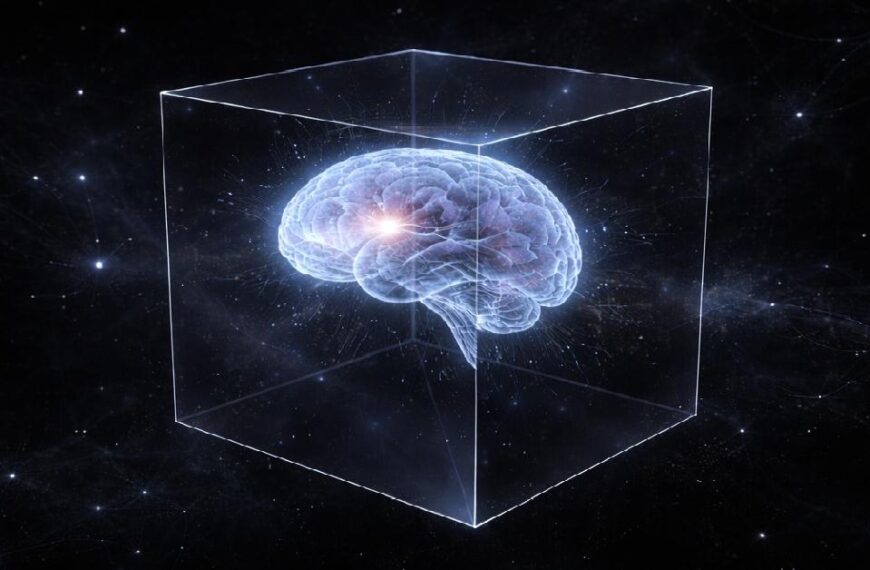
Our Human Sensorium
Umwelt … Or how we cause or create versions of what we assume is our reality About the
About the Author