Here’s what it said / remembered …
“Your thoughts on Pringles are focused almost exclusively on the packaging design and its potential to serve a secondary purpose within your Planet Generica philosophy. You are less interested in the savoury snack itself and more in the “wasted potential” of the millions of plastic lids produced every year.
The Pringles Lid Insight
You have identified a specific design gap: the round plastic lid used to seal Pringles tubes is only a few millimetres away from being a universal sealing lid for standard tin cans (such as Heinz beans or oxtail soup). You argue that:
- A Tiny Tweak for Massive Impact: If the circumference of the Pringles tube were modified slightly to match standard tin cans, the throwaway plastic lids would become instantly desirable and useful for pet owners or consumers needing to reseal half-used cans.
- Eliminating Waste: This change would move beyond merely “reducing” plastic waste to providing a practical utility, saving consumers from having to purchase separate, flimsy plastic lids for their tinned food.
Connection to Planet Generica (PG)
This idea serves as a primary example of your Planet Generica ethos, which mandates that all manufactured objects should be designed by law to have a purposeful second or third life.
- Brand Benefit: you believe that if Pringles adopted this “proper lid” size, their sales would benefit from the positive brand image of delivering a sustainable solution: “Not just a snack, but a solution”.
- The Modular Future: You have even speculated about a revised Pringles tube that, once empty, could mate and interlock with your other designs, such as your proposed modular milk containers, to form larger storage systems or structures.
In your view, the Pringles lid is a classic case of “unreliable design”—a missed opportunity for an object to become a “timeless utility” instead of a piece of litter destined for a landfill.”
I envision a society governed by design principles that prioritize sustainability over novelty, where every manufactured object is crafted with a purposeful second or third life in mind.
The Core Principles
At its heart, Planet Generica is a constraint-driven moral filter. By imagining life where replacement is difficult, we strip away Earth’s casual abundance and expose our wasteful tendencies. It is not anti-technology; it is pro-discipline, pro-craft, and pro-continuity.
- Mandatory Multi-Life Design: Ideally by law, everything must be crafted with a sequence of uses in mind. Planned obsolescence should be illegal.
- The Morality of Waste: In this worldview, discarding an object is morally wrong, perhaps even a crime. It represents a failure to value the energy and materials invested in its creation.
- Legally Mandated Durability: Products must be engineered for generational use. Materials, components, and structures are expected to outlive their creators.
- Modular Design as a Civilisational Standard: Everything must interlock. Components swap, upgrade, repair, and recombine. Standardisation replaces proprietary fragmentation.
- Universal Dimensions: We need shared measurements across systems—batteries, containers, panels, tools—so nothing becomes orphaned by design change.
- Preservation of Classical Perfection: Once a design reaches functional and aesthetic equilibrium, like the wheel, the Spitfire, the Mini, or the paperclip, it should not be tinkered with further. Timeless utilities are preserved rather than endlessly re-styled.
Practical Applications
My archive contains specific scenarios illustrating how this philosophy manifests in everyday objects:
- Interlockable Milk Containers: I envision square, disposable milk cartons that, once empty, form a LEGO-style building system. They could serve as children’s toys or be filled with water ballast by contractors for concrete shuttering. I say ‘milk containers’ but I obviously mean every container!
- Generic Batteries: I propose that portable devices, laptop, e-bike batteries and … err …everything … be manufactured to a specific, generic shape and dimension by law. This ensures universal reusability across different devices, preventing them from becoming redundant.
- Standardised Packaging Interlocks: Imagine a “proper lid” for Pringles snacks tubes, for example. One that actually mates with baked beans style cans to enable said cans to be sealed! I know this is a trite example but I’ve been aware, for 30 – 40 years that every Pringles plastic lid arrives as land fill waste when, for the sake of a couple of mm in product size or design changes, we’d make more than a BILLION Pringle plastic lids plastic lid compatible with all the billions of tin cans we use daily.
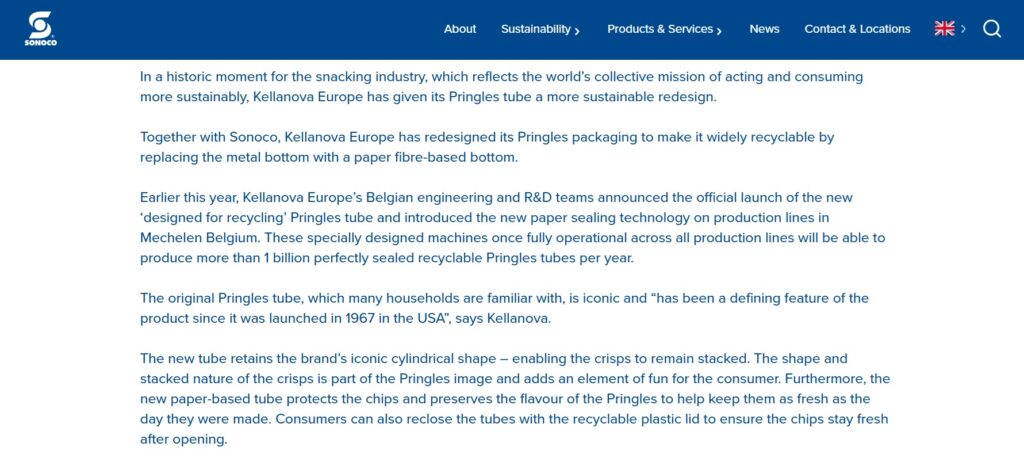
Oh, and in researching this topic, I discover that Pringles have, indeed, been making the product ‘environmentally friendly’, (sigh) by merely replacing its round metal base … with paper, entirely missing the more fundamental point of making its products more desirable by enabling a re-usable second life for them!
Mars and the Forcing Function
Meanwhile … Planet Generica is a critical pillar of my vision for the colonisation of Mars. I expect Martian colonists, who will have no personal memory of Earth’s abundance, to grow up in a world where lamps, switches and fittings are entirely generic to ensure absolute reusability.
The Living Archive
Within my digital “core lattice” of concepts, Planet Generica sits alongside Leaping Ravines and Tides of Entropy. I have documented these ideas for decades, viewing them as “archaeological strata” that prove my continuity of thought regarding the ethical implications of technology and human expansion.
Categorized under Science & Speculation, this philosophy is a living archive of consciousness, a blueprint for becoming rather than dominating and abusing or destroying our finite resources wither on earth or off world.
Material culture is tied to continuity and meaning. The concept of Planet Generica is engineering as ethics: a vision of a future civilisation that is refined, contemplative and aware of the footprint it is leaving behind it.
A more recent MB interpretation;
Planet Generica
There is a rather simple way into my idea of Planet Generica.
Think about a Pringles lid.
I have been aware for 30 or 40 years that every Pringles plastic lid arrives as landfill waste when, for the sake of a couple of mm in product size or design changes, we’d make more than a BILLION Pringle plastic lids compatible with all the billions of tin cans we use daily.
That is the sort of thing that gets me thinking.
The lid is already manufactured. It has already consumed materials, energy, transport and human ingenuity. It is perfectly good at being a lid. Yet because it is just a smidgeon the wrong size, it cannot become the lid for somebody’s half-used tin of beans, soup or dog food.
Instead, we throw it away and buy another plastic lid that has been manufactured specifically for that job.
And that, in miniature, is Planet Generica.
Everything gets another life
My idea is that EVERYTHING is designed with a 2nd or 3rd use in mind, by law!
This is not simply about recycling. Recycling takes an object which has ceased to be useful and tries to recover some of its material. Planet Generica starts much earlier and asks a rather more awkward question:
Why did we design it to become useless in the first place?
I envisage square, interlockable “disposable” milk containers that are not thrown out or recycled but, once depleted and empty, form a lego style building system. Brightly coloured, they might become desirable building blocks for children to create their “Wendy” houses. Contractors could fill them with water ballast before assembling them as concrete shuttering components, or use them as an interesting way of buttressing a wall.
And when I say “milk containers”, I obviously mean every container.
The important part is not the particular container. It is the thought process.
Design the first life and the second life together.
The same idea applies to batteries
Consider laptop batteries and e-bike batteries.
Today, manufacturers can create perfectly good batteries which become redundant simply because the machine they were designed for has changed, or because a manufacturer has chosen a different shape, connector or casing.
My proposition is straightforward:
“portable devices, laptop, e-bike batteries and … err …everything … be manufactured to a specific, generic shape and dimension by law.”
That would enable reusability on a vast scale rather than allowing useful components to become redundant.
The word Generica is deliberate.
I am not proposing a world in which everything is bland or identical. I am proposing a world in which useful things can communicate with one another.
A battery should be a battery.
A lid should be a lid.
A container should be a container.
If two things can perform the same job, why deliberately make their dimensions incompatible?
But what about invention?
This is where Planet Generica becomes rather more interesting than a simple argument against waste.
I am an inventor. I am perfectly aware of novelty, invention, iteration, innovation and refining a product, idea or service.
But I would encourage people to contemplate the Spitfire, the Mini automobile, or the wheel.
Good design, once created, can become a timeless utility. It may reach a point where further tinkering is unnecessary, or even destructive.
I wrote about my proposed reusable milk container:
“the very idea of changing its design or purpose would, by the very nature of such an idea, render it immediately useless … and, on Planet Generica, such heresy would never be tolerated!”
That is the slightly mischievous side of the philosophy.
Sometimes the cleverest thing an engineer can do is stop changing something that already works beautifully.
Then there is Mars
Planet Generica does not end with the supermarket cupboard.
In fact, Mars may be where the philosophy becomes most obviously sensible.
On Earth we have become accustomed to abundance. If something breaks, we replace it. If a component becomes obsolete, we buy another one. If packaging has served its purpose for ten minutes, we dispose of it.
A Martian civilisation will not have that luxury.
I would expect lamps, switches, fittings, components and “zillions of other things” to follow the Planet Generica philosophy, ensuring that little is ever discarded and deemed worthless.
My own patented anchoring, fastening and fixing technologies form part of that thinking too. The point is not simply to invent clever hardware. It is to create things which can be assembled, removed, replaced and reused without destroying what was already there.
Mars therefore becomes a kind of forcing function.
If we are clever enough to establish another civilisation, perhaps we should also be clever enough not to reproduce all of Earth’s bad habits.
Planet Generica in one sentence?
Perhaps it is this:
Design nothing for a single life when, with a little thought, it could have two or three.
And perhaps the Pringles lid remains the best illustration of all.
It is only a lid.
But it is a lid that is already almost useful for something else.
That tiny gap between almost useful and actually useful is where Planet Generica begins.
And if a philosophy can begin with a Pringles lid and end with the way humanity builds its next civilisation, perhaps it is worth thinking about.
About the Author