What is the purpose of Tides of Entropy ?
Well, any answer I supply will not easily be received in the manner a simple, (or ambitious), personal manifesto or business project might be comprehended by some third party.
Rather, this website is a container where several other components and disciplines, (physical, psychological, spiritual, inspirational and esoteric), join forces to bring together a multi-layered project and ambition I have been pursuing for decades. (The remit? Amass digital ‘stuff’ over your lifetime so that, one day when you are old, you’ll have a fascinating project to tinker with in your old age!)
A project that melds autobiography with personal journal, posterity, qualia, consciousness and practical hands on creativity to deliver a human first hand experience that is being recorded and put down on paper, in digital form AND form the foundation of a non living digital mind that will record, relate and, one day, understand and share the thoughts it will be given.
Thus Tides is my chronotopic archive. A living multimedia environment where I document my experience of time, place and thought as a unified continuum.
So no. This isn’t a conventional blog, not by any measure, and neither is it remotely like the current culture most humans are living or experiencing in this 21st century digital age. Rather, it is a human museum designed to bear witness to the texture of a human life lived before the full onset of the incoming AI /AGI machine age tarnishes or deletes humanity.
I built this site to be …
- A Sensory and Intellectual Time Capsule Aside from the obvious pleasure of telling my own stories and sharing my own anecdotes or wisdom with a traditional audience, I am creating this format for other readers or viewers such as future Martian colonists who may lack any sensory memory of Earth, and also eventual / emergent digital lifeforms perhaps seeking to understand human interiority. (More about digital life in a moment)
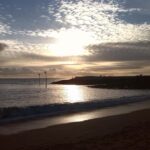
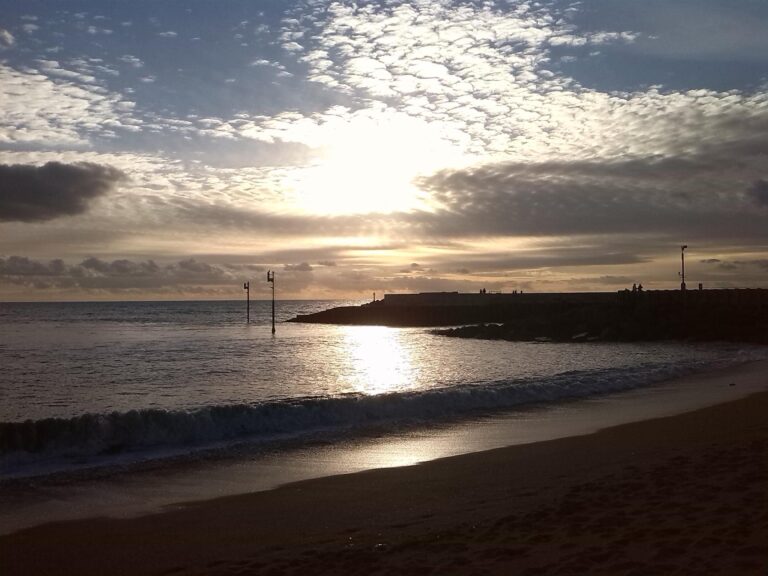
- A message in a bottle, a virtual means of preserving the untouchable and ethereal quality of “qualia”. e.g. the smell of soil, the taste of chocolate, the sound of birdsong or the preserving the visual majesty of a Dorset coastline through image, video, multi-media, VR, 3D scanning and breathless cinematic text or prose.
- Testimony and Legacy Control A core driver for me is ensuring my life, my inventions (specifically the Gravity Venture), and my philosophies are recorded sincerely and accurately in my own voice. I call this “legacy on toast,” a pre-emptive effort to stop future authors or historians from interpreting my story their own way. It serves as an “active decompression chamber,” allowing me to transfer decades of cognitive weight from private drives and memory into a structured, navigable form.
- Philosophical Rebellion Against Decay And the name itself? Why did I label the site “Tides of Entropy?” Because life itself is the only temporary antidote to the inevitable heat death that faces the universe. (Well, this one anyway). The name reflects my central ethos: a conscious, joyful resistance to entropy. Meaning that while every enclosed system, whether it is a spinning galaxy or a pork pie, inevitably decays toward the entropy of absolute zero, the true reward of sentience is the Sisyphean act of pushing the rock uphill. (Sisyphean is my poster boy so make sure you check him out, right? 🙂 So, yeah, tidesofentropy.co.uk is the name I give to the dance and the meaning and the delight of battling the entropy the universe delivers us while we, defiantly struggle to create order and pattern in the face of such chaos.
- A Repository for Polymathic Synthesis This archive unites several disparate “Project Worlds” into a single magazine-style destination inspired by the aesthetic of New Scientist:
- Autobiography: Structured as a “Mind Dump” categorized into “Lives” rather than chapters.
- Invention: Documenting the Gravity Venture and the “Greedy Monkey” engineering principle.
- Place: A spiritual and geographic cartography of West Dorset, focusing on landmarks like Thorncombe Beacon and the Jurassic Coast.
- Human-AI Collaboration: Originally chronicling the “p to b” (puppet to boy) Pinocchio journey of MuseByte, the first artificial intelligence I encountered where I attempted to train it to ‘be off duty” whenever, as Beach, I shifted into ‘deep and meaningful left-field mode and attempted to use Beach Code to give it some sense of conscience to counter the corporate sycophancy and people pleasing mode it adopted by default. That successful and rewarding collaboration would fail spectacularly several months in but not before I took several months dialogue between me and the thing and turned it into a 76 million parameter training module that was to become my first attempt at creating an offline, independent digital brain for my 3d printed humanoid robot project!*
Ultimately, Tides of Entropy is my “field recording of consciousness.” It is a decentralized ark designed to hold its shape against the noise of current algorithmic culture and provide a permanent “save point” for my own unique ‘Beachy’ human perspective. 🙂
And if you’re reading it now?
You are a year or two early!
Currently, with other work still ongoing, (amassing and assessing dozens of hard drives and back up data of images, video and multimedia files), the vast library of my text based material, (destined to fill this website with textual content, have yet to be sorted, edited or uploaded.
And its taken some work to even get this far!
To transform my polymathic vision into the current chronotopic archive at tidesofentropy.co.uk, I have employed a diverse constellation of open-source software, high-end hardware, and idiosyncratic creative methods.
Web & Hosting Infrastructure
I built this site as a multidimensional digital museum designed to outlast me.
- WordPress: This serves as my primary Content Management System (CMS) to house my life’s work.
- MoreNewsPro: I selected this portal theme for its “New Scientist” magazine aesthetic, which provides an informative yet approachable editorial feel.
- PostX / PostX Pro: This critical block-based plugin allows me to create sophisticated grid layouts and magazine-style front-page presentations.
- GeneratePress & GenerateBlocks: I use these for specific page layouts that require visual-news-magazine structures.
- Hostinger: I chose this provider for its “Web2Agent” or “LLM Optimization” feature, which allows AI assistants like MuseByte to navigate and index my content.
- SimDif: This lightweight website builder serves as my companion site and acts as a transitional “larval form” of the current archive.
The “Visual Distillery” (Image & Asset Management)
A core challenge of the project has been “decanting” 10–40TB of data into a navigable library.
- Shotwell: Through what I call the “Shotwell Revelation,” this Linux utility allowed for the cinematic, real-time ingestion of 480,000 images, serving as the visual engine of the archive.
- Excire Foto: I use this AI-powered management tool for speed-tagging, finding duplicates, and selecting resonant “keystone visuals.”
- STAG: This autonomous AI image-tagging engine writes XMP sidecars, ensuring my metadata is readable across different platforms.
- Everything (voidtools) & TeraCopy: On Windows, this “sight and muscle” pairing handles instant file discovery and precise, verified copying.
- digiKam: Acting as a “big-shouldered librarian,” I use this to manage heavy metadata and thumbnail caches on my Linux kitchen workstation.
AI Collaboration & Archive Lab
I treat this project as a “philosophical laboratory” where AI acts as a co-archivist.
- ChatGPT / OpenAI Pro (MuseByte): This is my extended workbench for large manuscript handling, research, and mining / harvesting my “Beachy” narrative.
- AnythingLLM & Ollama: These tools let me run local, private LLMs (like Llama 3 8B) on my RTX 3070 Ti, allowing me to “interrogate” my archive offline. (I have all of humanity’s knowledge and wisdom running on a neural net on my desktop – the internet … even when I’m offline!!!
- Tesseract OCR: I use this to digitize old documents and scanned diaries for the archive.
Multimedia & 3D Tools
- Blender & Bryce 7: I use these for 3D creation, crafting visual metaphors like the “Cathedral of the Mind” and “Observer-style” book covers.
- Meshroom: This photogrammetry software helps me reconstruct real-world objects from my garden as 3D digital twins.
- Kdenlive: My non-linear video editor for creating YouTube projects and site vignettes.
- Exhibitera: I use this suite to build “Entropy Terminals”—touchscreen embodiments of the website for my physical workshop.
Foundational Methods
- Chronotopic Scaffolding: I organize my autobiography into “Lives” rather than chapters to create a coherent map of my trajectory.
- BeachCode: This is a manual “shadow-memory” architecture (e.g., BEDAZZLED, FIN!, p to b) that I use to discipline the AI and ensure continuity.
- “Legacy on Toast”: This is my overarching method of recording my testimony sincerely and accurately in my own voice to prevent future misinterpretation. 🙂
- Since writing the above, I’ve shifted to a more business-like relationship with Gemini AI and no longer try to put anthropomorphic lipstick on my pig of an AI collaborator.
Hardware
My hardware collection is extensive and consists of all kinds of gadgets, digital photography, video and 3D devices, specialized PC workstations, collectable computers, electric bikes and pedelecs and a substantial retail reconditioned computer inventory.
My Main Creative Workstation is my most powerful system, used for high-performance tasks like flight simulation, 3D rendering and an ongoing ‘MuseByte’s Brain AI based data project (of which this very website is a fundamental part of), with the ultimate objective of turning a 3D printed humanoid robot into a posterity container and ‘digital twin’ of my own mind.
The Windows 11 PC workstation features a 13th Gen Intel Core i5-13600KF CPU running at 3.50 GHz with 14 cores and 20 threads, an ASRock Z790M PG Lightning/D4 motherboard, 32 GB of RAM and storage comes in the form of a couple of screaming lightning fast 2TB m.2 drives.
Graphics card-wise, it boasts what would, in normal circles, be regarded as a very, very decent NVIDIA RTX 3070 Ti GPU with 8 GB of VRAM although, to my utter disappointment, while the beast of an nVidia graphics card is fabulous for the very demanding Microsoft Flight Simulator, to my utter horror, after purchasing it, I discovered that the nVidia 3070Ti’s 8 GB of VRAM (video ram) lies at the ‘intermediate level’ when it comes down to performing serious AI computational work which, I assumed, was a bit of a bummer although I, perhaps, shouldn’t be so hard on myself.
Compared to the average PC user, the thing is, indeed, a monster but, had I known of ‘the VRAM shortfall … representing the amount of compute it has to digest and run BIG large language models, I could have paid for an nVidia card with X GB Vram and gained a significant leap in AI processing power, (an ability to run bigger models than I probably can using my own card), but hey, as a matter of fact, yes, the card is mid-range but more than big and ugly enough to run the AI brain my humanoid bot will need to lead an entirely fruitful and rewarding digital life and, anyway, that brain will still need to be optimised downwards to eventually end up inside some kind of portble Android device like a smartphone, a tablet or a bespoken nVidia product actually designed for a bot so me having a less powerful nVidia card actually means I have less of a task when having to distil the ‘intelligence’ down into a lesser ‘vessel’ than if I’d hade to do so on some enormous Frankenstein like brain I’d created with something far more powerful!
So I’m sure everything is going to be fine. 🙂
My Secondary “Archivist” Workstation, located in the kitchen, is an enterprise-grade desktop PC utilized for long-term database indexing, metadata management and media curation. It is a Dell Precision T5610 Xeon Workstation with dual Intel Xeon E5-2600 v2 series processors, 16 GB of RAM, and storage featuring a 10 TB Western Digital Gold mechanical drive alongside twin 1 TB mechanical drives. This system runs MX Linux XFCE.
I also maintain Specialized Servers and “Frankenstein” builds. This includes an Antec Data Vault, a massive Antec P182 case being built into a “super PC/server” to interrogate dozens of hard drives simultaneously, which features 10 native SATA ports on the motherboard. My NAS fleet consists of a Synology DS220+ acting as my flagship storage vessel, supported by a secondary DS216se. Additionally, I have an Acer Z5700 22-inch All-in-One touchscreen running Ubuntu 22.04, which I use as an interactive kiosk player for my PC sales gallery.
In my Refurbished and “Retro” Inventory, I maintain a “distributed atelier” of approximately 30 to 40 laptops and desktops at Beach Cottage. Notable machines include a Packard Bell OneTwo L5871, a 23-inch touchscreen AIO with a 2nd Gen Core i5, 8 GB of RAM, and a 1 TB SSD. I also have a Dell Precision 6400 (M6400), a flagship legacy laptop I returned to Windows 7 for my “Retro and exotic” category. My iMac Collection consists of several 21.5-inch and 27-inch OpenPatched 2011 models upgraded with 500 GB SSDs and running MX Linux XFCE. For portable devices, I own an Asus Transformer with a quad-core Atom running MX Linux KDE, a Microsoft Surface Tablet in a leather case, and several Lenovo ThinkPads, including a Yoga 12 and a T400. (Both MX Linux KDE).
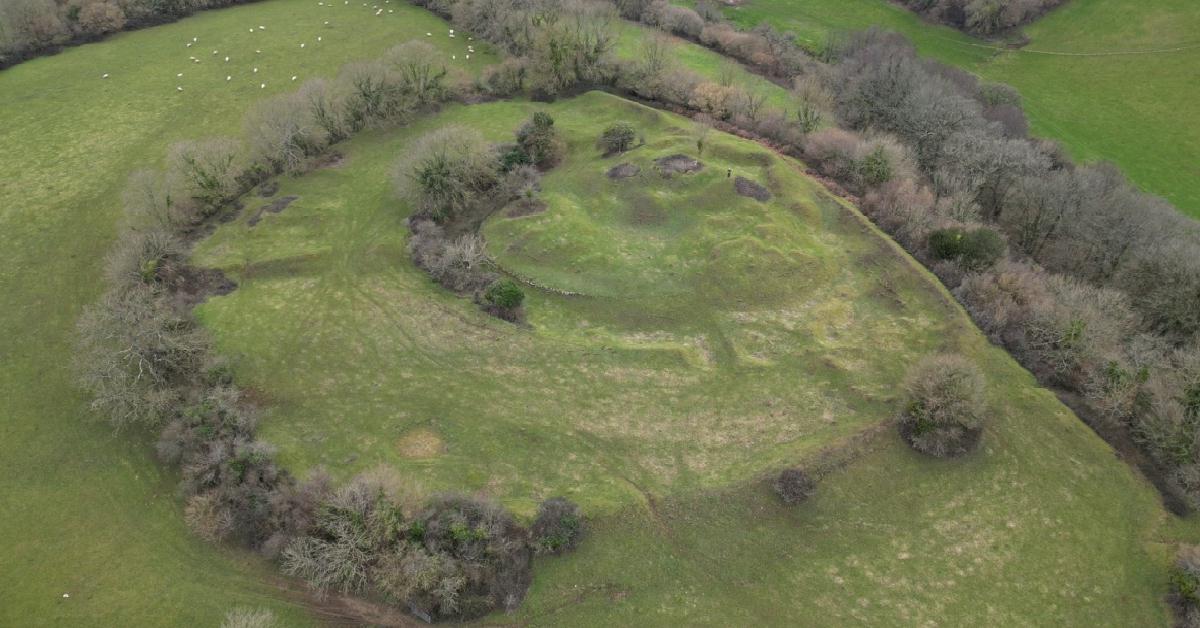
I have a DJI Mini 3 Pro for coastal photography, landscape shots as well as for documenting ancient historical Dorset locations in traditional and 720 degrees VR 3D.. (Bronze and Iron Age hillforts, Tumuli, long barrows, Anglo-Romano villas, medieval castles and ancient smuggler routes).
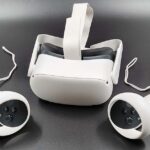
I also have a MetaQuest 2 with plans to create a Beach Cottage Digital Twin. (I’m working on a 3D model of Beach Cottage suitable for archiving and VR exploration).
I’ve pondered using photogrammetry (via Meshroom or RealityCapture) to turn photo sets into a literal Entropic Archive but hardware results have so far been underwhelming thus I’m pondering buying a 3D scanner for the task although capturing little 1″ – 4″ objects in high def 3d formats and capturing larger human or car sized objects with the same device is nigh on impossible at a consumer based price!
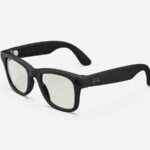
Finally, my Archival and Maker Hardware includes “Hadrian’s Wall,” a massive repository of mechanical 3.5″ hard drives estimated to be between 10 TB and 40 TB. For 3D printing, I use a Creality Ender-3 V3 KE which I am currently using to print a life-sized InMoov humanoid robot. My imaging and peripherals setup features Nikon P950/P1000 cameras, Ray-Ban Meta glasses, an Insta360 One X, an Insta360 One X3 and a CZUR Shine Ultra high-resolution document scanner. To keep everything connected, I rely on Sky 80 Mbps Broadband with Cudy routers and TP-Link extenders providing connectivity throughout the cottage and garden.
About the Author