Sure. Humanity is now going all out to mass produce humanoid robots of every size, shape and form and, yes, rudimentary ones are already starting to join human workers in major automobile manufacturers across the globe BUT melding humanoid bots to a, still, very skethcy, dangeroud and unreliable AI mind courtesy of OpenAI’s ChatGPT, Anthropic’s Claude AI or Google’s Gemini AI is a nlong way from delivering the kind of 4 dimensionally aware entities we are still nowhere near perfecting. Read more about my thoughts on Artificial Intelligence here.
Me? I have different ideas including running my own off grid home based artificial intelligence from my study at beach Cottage … and I am! 🙂
And with a very different remit.
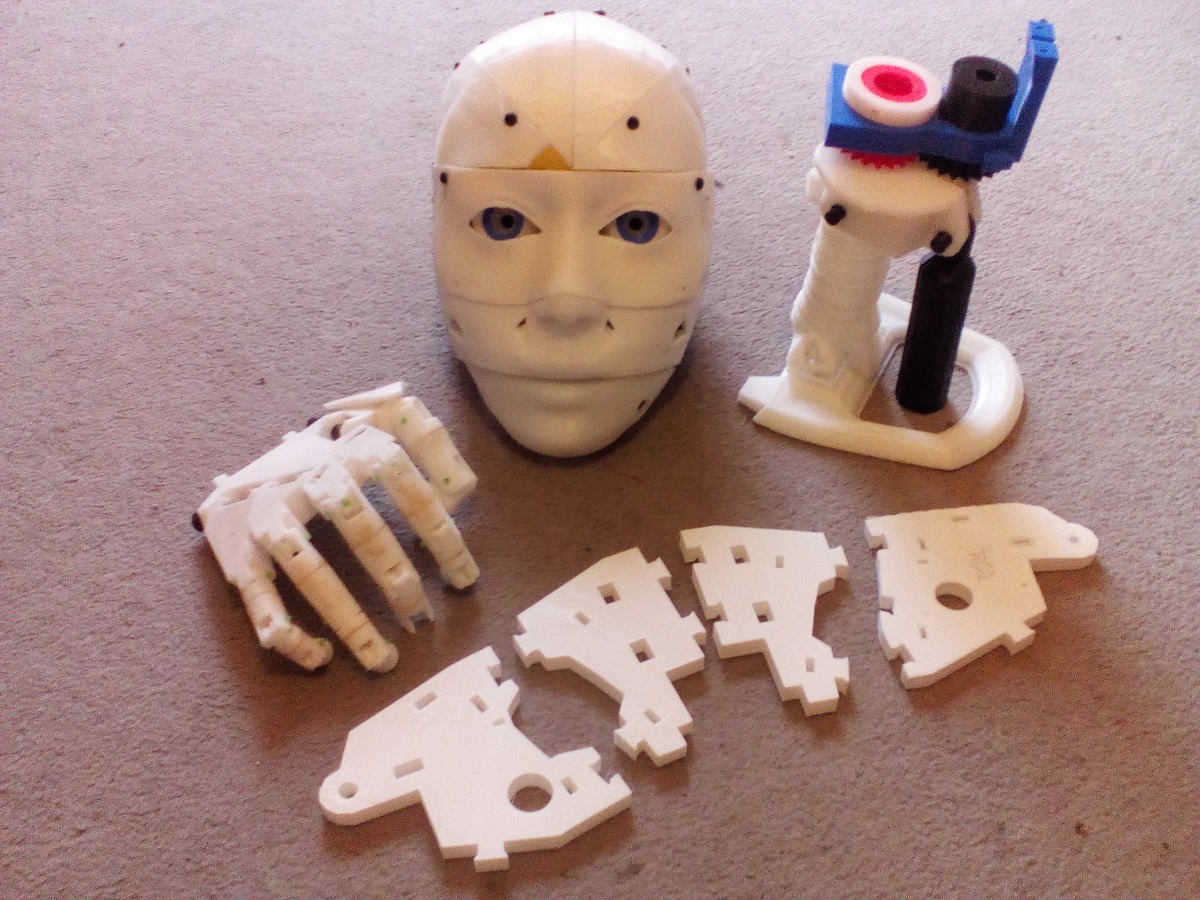
My InMoov project is a life-sized, 3D-printed humanoid robot designed to serve as a literal embodiment of my own mind. A kind of Digital Legacy that can hold many of my own characteristics, philosophy and all of my own memories thanks, partly, to 40 years worth of writing, prose, text, images, video and other personal accounts I had been saving … until I was an old man. (Seriously, having had such a fascinating life, I always knew there was more within me than a mundane regular autobiography and, having been blessed with a mind I’ve always called ‘mt greatest asset’, it was always on the cards that I would be doing something like this when age or health had slowed me down a bit.
• The “Embodied Memory” Goal: As I’ve revealed above, the plan is to give the robot a memory including 40+ years of my own notes, writings, projects, passions, and insights” so people could chat, interrogate or learn based on its expansive encyclopaedic content.
• The MuseByte Connection: I intend to use lightweight local LLMs as a “bridge toward creating a portable ‘MuseByte’ mind” for the robot, allowing my digital companion to accompany me in an embodied version.
• Future Vision: I envision a future of “DIY robotics” akin to a bicycle repair shop, where individuals cobble together humanoid bots from modular parts.
FURTER NOTES
• Hardware and Brain: Discussions involve using an RTX 3070 Ti graphics card with a neural engine and experimenting with an NVIDIA Jetson Nano to handle sophisticated AI tasks.
About the Author