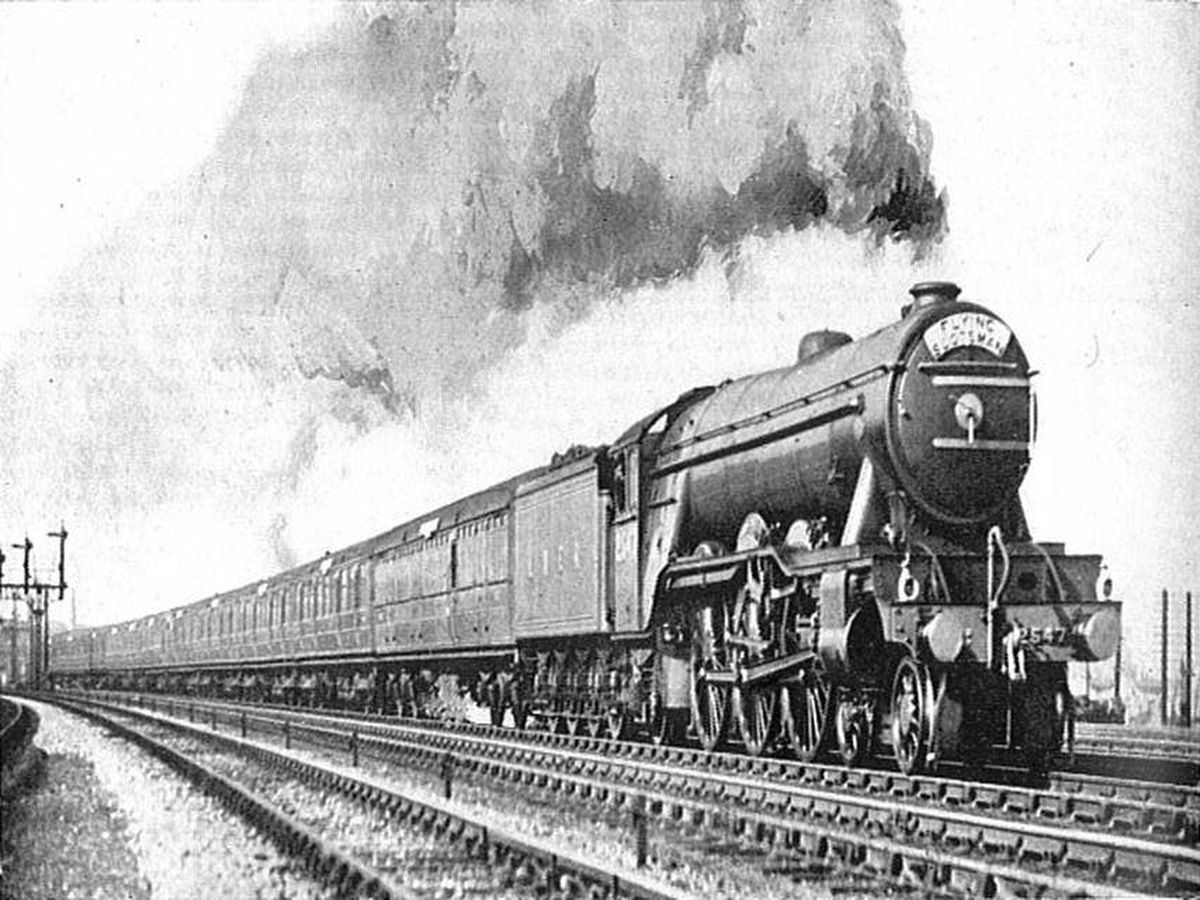
I was born in 1956 but my story starts on a steam train speeding south from Scotland to England 3 years prior.
It is 1953 and, onboard, a little boy, aged 5, and little girl, aged 7, watch an English countryside speed past while, opposite, the formidable monochrome figure of a Catholic nun sternly pins the children to their seats with her gaze.
Abandoned by their mother, these children had spent years in a Scottish childrens home but now, partly due to an accident, (or some questionable act of serendipity), they were heading south to be reunited with her.
This fact is not, and would never represent some fairytale, happy ending for the children but it would create the circumstances that would lead to my own conception and birth.
It is difficult, perhaps impossible, to decypher the true psychological character of their mother, Kathleen McCartney, at the time these events were unfolding but I do know that the prior act of depositing her children in a Catholic orphanage several years earlier, would not have played heavily upon her conscience.
She was planning to marry an RAF airman she had met at a dance and, yes, one day he would become my father but, before then, she had a problem.
In order to gain approval for the marriage from the RAF man’s own mother, she would be forced to take the orphans back.
And that is what happened … and that was why this story opens with a train speeding south from Scotland.Three years later, Kathleen McCartney, who was not a maternal woman, gave birth to a baby boy.
His name was Christopher.
NOTES
Your life in Yeovil began at 4:55 pm (or 5:05 pm) on 15th December 1956, when you were born at the Five Crossways Hospital. Your earliest home was a prefabricated dwelling at No. 1 Abbey Road, Larkhill, before the family moved to 61 Freedom Avenue
Family Dynamics and Early Neglect
The foundation of your autobiography, “Life One,” is built on the stark realization that you were born into a family where the adults cared little for your emotional or physical well-being.
• The “Ammonia” Memory: A defining sensory memory involves you as a three- or four-year-old, standing by a wall of bushes and wondering why your oversized khaki shorts and striped T-shirt smelled of ammonia and were stained with a deep yellow patch.
• Sibling Origins: You later discovered a hidden family history: your mother had abandoned two children, John and Cathy, in a home in Scotland; your father only married her after your grandmother, Daisy Goodland, insisted they be reunited and adopted into the family.
• Atmosphere of Discord: Your earliest memories of home are defined by constant rowing, conflict, and “hidings” administered by your father at your mother’s command, leaving you feeling genuinely unloved and isolated by age four.
Formative “Tortures” and Survival Strategies
• The Pushchair Incident: One of your first conscious memories is being wheeled at breakneck speed around the kerb-lined grass “circle” in front of your house by your brother, John. He would ignore your terrified screams, threatening you with the “rings”—pretending he would lift the rings of the pushchair so it would fold up and “gobble” you while you were trapped in your toddler reins.
• Inner Narrative: To cope with this environment, you developed a very acute conscious sense of self and a powerful inner narrative that allowed you to fill the emotional gaps left by your immediate family.
Nan’s Sanctuary
Your grandmother’s house at 45 Westfield Crescent was your ultimate sanctuary and font of love. You remember this space through its specific comforts:
• Sensory Details: The ticking of cuckoo clocks, the sound of Bakelite radios playing The World At One, and the taste of Co-op lemon cordial, home-baked rock cakes, and strawberries and cream.
• Nan and Pop: Your Nan and your tall, silver-haired grandfather, Pop, provided the essential pillars of your character and the bedrock of your compassion.
Early Rebellion and School Life
At Westfield Junior School, you displayed early signs of a nonconformist mindset.
• The School Poster: While other five-year-olds designed adverts for soap powder, your posters defiantly proclaimed “Eat Food!”, “Sit on Chairs”, and “Breathe Air!”. You reflect that even then, you were aware of the insincerity of advertising.
• The “Sweets” Incident: During a school assembly, when teachers threw handfuls of sweets onto the floor, you were the only child who stood firm while thirty-nine others scrambled “like dogs,” refusing to demean yourself for a routine reward.
• Mrs Sandy: Your first teacher, Mrs Sandy, showed you great pity and care, once tying your shoelaces after you absconded from school to follow your Nan’s trail back home.
The Threshold of the 1970s
Your childhood in Yeovil concluded amidst the national darkness of the early 1970s.
• The Moon Landing (1969): A core memory is watching Neil Armstrong on the moon while your mother poisoned your mind against your father, using the historic moment to utter graphic and cutting remarks about their private life to encourage you to hate him.
• The Final Departure: In 1971, during the Heath government power cuts, you helped your mother carry her belongings into town in total darkness, eventually leading to your move to the Isle of Wight and the end of your Yeovil upbringing
About the Author