
This text documents an extensive exchange between Chris (using the online persona “Beach”) and a woman named Jane (under the profile “February”), who connect on the Guardian Soulmates dating site in 2013. Both individuals share personal histories defined by profound grief and trauma, with Chris recovering from a mental breakdown following a failed marriage and Jane mourning the recent death of her husband. Their messages evolve from cautious introductions into a deeply intimate “meeting of minds” where they discuss philosophy, parenting, and Chris’s unique invention involving gravity technology. Chris describes using his digital persona as a therapeutic shield, while Jane expresses both the comfort of their connection and a persistent fear of real-world vulnerability. Despite never meeting in person within the text, the dialogue reaches a level of intense emotional flirtation and mutual support. Ultimately, the sources highlight the power of online anonymity to facilitate healing and provide a “pleasant distraction” from shattered lives.
How do Chris and Jane navigate their past traumas through their online personas?
In what ways does the tension between online fantasy and reality affect them?
How does the theme of scientific logic contrast with their deep emotional needs?
Today • 19:36
How do Chris and Jane navigate their past traumas through their online personas?
Chris and Jane use their online personas, Beach and February, as protective filters to navigate significant personal tragedies and re-engage with the world. While their traumas differ—Chris dealing with a historic mental breakdown and Jane with recent widowhood—both utilize the digital space for psychological distance and emotional processing.
Chris and the Persona of “Beach”
Chris created the persona of Beach following the collapse of a 20-year marriage in 1999, which, combined with business pressures, led to a total mental breakdown. He describes suffering from panic anxiety, night terrors, reactive depression, and dissociation.
• Beach as a Proxy: Chris explains that “hiding behind his persona” allowed him to discuss his breakdown and marriage. Talking about these issues in real life was “taboo” and distressing, but the “proxy of Beach” allowed him to discuss them with strangers in writing.
• Healing through Writing: Over a decade, using this persona enabled him to “entirely rid [himself] of the heartbreak, upset and stresses” that had previously overwhelmed him.
• The Barrier Effect: Chris views “Beach” as a barrier between the internet and his real life. He distinguishes between the two: Beach is the “thoughtfully presented prose” and “deliberate text,” whereas “Chris” in Bridport is the “more playful, less structured” version of the same mind.
• Recovery and Return: He views his ten-year online journey as a way to “rid [himself] of all [his] fears and flaws” so that he could finally return to the “serious business of dating”.
Jane and the Persona of “February”
Jane adopts the persona February to navigate the recent and “shattered” reality of her life after her husband died from a “horrific 5 month battle with cancer” a year prior.
• Escapism and Distraction: Jane explicitly refers to her online presence as “escapism”—a different world compared to the one she is currently walking through. Communication serves as a “pleasant distraction” from her mundane responsibilities as a sole parent to three young children.
• Safety in Anonymity: As a self-described “technophobe,” Jane is initially cautious and cynical about sharing information in written form. The persona allows her to maintain anonymity, which she finds necessary because her real life is “no-ones business” and she is weary of others’ opinions on how she should grieve.
• Processing Grief: Jane uses the persona to express feelings of being “lost” and “drifting” without her “soulmate”. The persona allows her to engage in “mental flirtation” and seek the feeling of being “safe” and belonging again, without immediately integrating a new person into her complicated “real world”.
Joint Navigation of Trauma
Together, the two use their personas to “test the waters” of intimacy after long periods of isolation or grief.
• Cerebral Connection: Chris suggests that their communication is a form of “therapy,” a sentiment Jane echoes when she notes it has probably saved him money on a counsellor.
• Managing Expectations: Jane uses her persona to set boundaries, noting that her life is “way too complicated” for a relationship and that she is primarily looking for “friendship and a connection”. Chris responds by adjusting his own profile to “seeking friendship only” to match her comfort level.
• A “Mental Workshop”: Chris describes his mind as a “mental workshop” with space to store “baggage,” suggesting that their personas allow them to sort through their respective traumas “into their correct boxes or containers” before attempting a real-life meeting.
By the end of their correspondence, Chris credits Jane with inspiring him to make real-life changes, such as returning to the dentist and quitting smoking, effectively helping “mould Beach from online persona back into a real living person again”.
How did their digital personas help them communicate more openly?
How did Jane use ‘escapism’ to cope with her grief?
What role did anonymity play in their emotional recovery?
In what ways does the tension between online fantasy and reality affect them?
The tension between online fantasy and reality serves as both a therapeutic sanctuary and a source of profound anxiety for Chris and Jane. While their digital personas allow them to process trauma with a degree of safety, the looming transition into physical reality exposes deep-seated insecurities and fears of disappointment.
Escapism versus “Shattered” Reality
For both individuals, the online world acts as a necessary “escapism” from their difficult daily lives.
• Jane describes her real world as “shattered” following the death of her husband, viewing her digital interaction with Chris as a “pleasant distraction” from her mundane and heavy responsibilities as a sole parent.
• Chris utilizes the “proxy” of his persona, Beach, to discuss personal breakdowns and marriage failures that were “taboo” and too upsetting to address in real-life conversations.
• However, this fantasy occasionally clashes with reality, such as when Jane’s real-world obligations—like cooking for her children or attending parents’ evenings—interrupt their digital “mental flirtation”.
The Discrepancy of the Curated Image
A significant tension exists between the polished versions of themselves presented online and their physical realities.
• Chris admits that his online confidence is a curated “Beach” persona, whereas in reality, he suffered from a loss of self-esteem due to missing front teeth. This physical “gap” caused him to “bottle out” of meeting people for years because he could not face them without his cosmetic “bridge”.
• Jane expresses a recurring fear that she is “just an average kind of girl” and that her “glammed up” photos do not accurately reflect her everyday appearance. She worries that Chris, who she views as an “online veteran,” will be disappointed “in the flesh”.
• Chris acknowledges this divide by distinguishing between “Beach,” who is “thoughtfully presented prose,” and “Chris in Bridport,” who is “more playful, less structured”.
The “Dangerous” Momentum of Mental Intimacy
The sources highlight how the “mental affair” between them creates a psychological momentum that is difficult to manage in the real world.
• Jane finds the connection “scary” because it feels “palpable,” leading her to feel “spooked” when she dreams of Chris. She notes that the mind “plays tricks” by filling in the blanks of an unknown person, creating a “physical chemistry” that might not exist in reality.
• Chris describes their connection as a “cerebral” bond but admits that it is “dangerous” if not kept under control, as their minds are currently “filling in spaces” that they cannot truly know yet.
• This tension leads Jane to occasionally “withdraw” to “re-calibrate,” as the intensity of the fantasy starts to feel “destructive” when compared to her complicated real-life situation.
Bridging the Gap: From Persona to Person
The ultimate tension is the transition from a “cerebral fantasy figure” to a “real living person”.
• Chris views Jane as a “Blue Fairy” figure who might be able to “mould Beach… back into a real living person again,” encouraging him to fix his teeth and improve his fitness.
• Despite the “numb, palpable but deafening silence” that Chris fears might occur if they meet and find no chemistry, he argues that they should use each other as a “resource” to “rekindle the inner spirit” regardless of the physical outcome.
• Jane remains the more cautious of the two, perpetually weighing the “liberating” fantasy against the reality that her children hold their father on a “pedestal,” making the introduction of a real-world partner a potential 10-year challenge.
How did Chris’s missing teeth affect his ability to meet?
Why does Jane worry about Chris’s fixation on physical attributes?
How do they manage the risk of meeting in person?
Why does Jane worry about Chris’s fixation on physical attributes?
Jane’s concern regarding Chris’s fixation on physical attributes is rooted in her deep-seated personal insecurities and a fear that his digital idealisation of her will not survive a real-life encounter.
Personal Insecurity and Body Image
Jane admits to having several “hang ups” regarding her appearance and describes herself as someone who is not naturally photogenic.
• Specific Triggers: She is particularly “hugely self conscious” about her hair, which she describes as a major source of feeling “inadequate and insecure” at an appearance level.
• Fear of Comparison: When looking at other women on the dating site, she experiences an “inferiority/inadequacy complex,” viewing herself as an “old, tired” lettuce leaf compared to the younger “glistening” competition.
• Confirmation of Bias: For Jane, the fact that a more attractive photo leads to more “views” simply confirms her cynical view that “everything is about appearance,” a reality she finds problematic because she struggles to feel okay with her own looks.
The Gap Between Online Fantasy and Reality
Jane worries that the “Beach” persona—which she views as self-assured and perhaps a little cocky—is building an inaccurate image of her.
• The “Glammed Up” Fallacy: She explicitly warns Chris that her profile photos are not an accurate reflection of her daily life, as they were taken when she was “glammed up” for a charity event.
• Fear of Disappointment: She repeatedly cautions him that he would likely be “somewhat disappointed in the flesh” because she is merely an “average kind of girl” with less self-discipline regarding her fitness than he might imagine.
Discomfort with Chris’s Analytical Approach
Jane is particularly bothered by the clinical and specific way Chris evaluates physical traits.
• Spooked by “Obsession”: After Chris shares a detailed breakdown of the “likes” on his profile—Jane tells him she is “suitably spooked” by what she calls his “obvious obsession” with measurements.
• Triggering Female Insecurities: She advises him to be careful with such talk, noting that most women are “riddled with body image issues” and find such scrutiny unsettling.
• Prioritising the Mental Connection: Jane attempts to shift the focus away from the physical, questioning whether a “mental” relationship is more powerful. She argues that if a person is “relatively eye pleasing,” the physical specifics should not matter compared to their “meeting of minds”.
Ultimately, Jane worries that by focusing on her physical “curves” Chris is engaging in a “frivolous fantasy” that ignores the “emotional and practical baggage” she carries in her real life as a grieving widow.
How did Chris’s dental fix help bridge his personas?
How do their child-rearing duties impact their online intimacy?
Why did Chris’s invention contribute to his mental breakdown?
Chris’s invention, which he refers to as the “Gravity venture” or “Gravity technology,” was a central factor in his mental breakdown because of the immense psychological pressure it exerted and the devastating impact it had on his personal life.
The ways in which the invention contributed to his collapse include:
• The “Straw that Broke the Camel’s Back”: Chris was historically a “strong and together person,” but the pressure of being successful in business, combined with the failure of his 20-year marriage, became the final catalyst for his breakdown in 1999. He describes the experience as being “disassembled” by panic anxiety, night terrors, and dissociation.
• Destruction of his “Perfect Life”: Chris explicitly states that the invention “contributed to destroying [his] perfect life”. He views the commercial element of the venture as a primary source of the strain that ended his marriage to Jackie, a loss he describes as the “loss of my complete world”.
• Sacrifice of Social and Private Life: In pursuit of the business’s “ultimate goal,” Chris admits he sacrificed his private and social life. This singular focus on the business at the expense of his well-being eventually left him “lonely, confused and / or hurting” in the years following the breakdown.
• Psychological Trauma and Avoidance: The trauma associated with the business was so profound that Chris eventually chose to kill the “whole project stone dead”. Although he still owns the patents and a warehouse of stock, he refuses to revisit the commercial side of the venture because he believes his “psyche would not take it”. He now views the business as a “traumatic, distressing and devastating part” of his past.
By moving away from the venture and adopting a “simple life” mending PCs, Chris believes he has created a safe, stress free environment where those “dark times can never return to haunt” him.
How did the “Gravity technology” impact Chris’s marriage and breakdown?
What was the “Gravity venture” that Chris mentions as traumatic?
How does Jane view the connection between Chris’s invention and his past?
How does Jane view the connection between Chris’s invention and his past?
Jane views Chris’s invention as a significant but destructive force that served as the primary catalyst for the dismantling of his previous life. While she is initially curious about the “Gravity technology” and asks if it was “commercially successful,” her perspective quickly shifts toward the profound emotional and psychological cost the venture exacted.
Jane’s understanding of the connection between the invention and Chris’s past includes the following insights:
• A Catalyst for Collapse: Jane acknowledges Chris’s own assessment that the business pressures surrounding the invention were the “straw to break the camels back,” leading to his divorce and mental breakdown. She describes his subsequent ten-year online journey as a form of “therapy” necessitated by this collapse.
• The Sacrifice of Private Life: Through their dialogue, Jane recognises that Chris’s pursuit of the invention’s “ultimate goal” resulted in the sacrifice of his private and social life. She perceives his current “simple life” as a protective retreat from the high-pressure commercial environment that once “disassembled” him.
• A Source of Lingering Pain: Jane shows sensitivity toward the fact that the invention is tied to “traumatic, distressing and devastating” memories. She even apologises for “taking [him] back to a place [he hasn’t] visited in a long while” by asking about the project.
• The “Hot Embers” of the Past: Although Jane finds the technical aspects of the invention “over [her] head,” she understands its role in creating the “hot embers” of Chris’s past—the shared history and lingering love for his ex-wife, Jackie, that was lost due to the “Gravity venture”.
• A Tool for Personal Rebirth: Ultimately, Jane views Chris’s decision to “kill the whole project stone dead” as a vital step in his recovery. She sees him now as someone who has successfully used his online persona to “rid [himself] of all [his] fears and flaws” created by that period of his life.
In Jane’s eyes, the invention represents a “shattered” world similar to her own experience with grief, and she views their connection as a way to help him move past the “baggage” left behind by his former professional life.
What was the “unrequited love” theme Chris discussed regarding Tennyson?
How did Chris’s family history impact his views on intimacy?
Why did Jane decide to delete her online dating profile?
What was the “unrequited love” theme Chris discussed regarding Tennyson?
Chris identifies a recurring theme of “unrequited love” within his cultural interests, specifically citing Lord Tennyson’s poem The Lady of Shalott as a primary influence. He relates this poem to his favourite painting, describing the narrative of a girl who yearns so intensely for Sir Lancelot that she locks herself away in a tower. According to Chris, the theme reaches its peak when she spies Lancelot riding past her window and finds she can no longer bear her isolation.
Chris further explores this theme by connecting it to other works in his “mental workshop”:
• Ray Bradbury’s The Foghorn: He uses this story to illustrate the concept of “someone always waiting for someone who never comes home” and the pain of loving something more than that thing loves you in return.
• Tim Buckley’s “Song to the Siren”: Chris notes that the lyrics of this song mirror the same “broken lovelorn” sentiment found in the Tennysonian poem.
Chris suggests that these cultural fixations reflect his own “abstract level of romantic existence”. He admits that while he holds onto thoughts of achieving a “new perfect life” or finding a “perfect partner,” he often feels as though these are ideas that exist only in his mind rather than in concrete reality. This sense of yearning for something potentially unattainable is a core part of how he views his own emotional journey.
Why did Chris relate his story to ‘The Foghorn’?
How do Tennyson’s themes mirror Chris’s current view on romance?
How does the poem Icarus reflect Chris’s business failures?
The poem “Icarus,” written by Chris around 1996 during the height of his business venture, serves as a poignant metaphor for his subsequent professional and personal collapse. Chris explicitly states that he relates himself to the Icarus character, viewing his business journey through the lens of this Greek myth.
The poem reflects his business failures in several key ways:
High Ambition and the “Ultimate Goal”
The poem describes a figure driven by a “need to fly” towards a “journey to the Gods” to go where “no one else has gone”. This mirrors Chris’s real-life pursuit of his Gravity Technology, which he pushed toward its “ultimate goal”. Like Icarus flying toward the sun, Chris’s ambition required him to “sacrifice” his private and social life in pursuit of international success.
Defiance against “Doubting Men”
In the poem, Chris writes that hearing “doubting men” only served to make the protagonist focus more intensely on his goal. This reflects the adversarial relationship Chris had with his local investors, whom he eventually blamed for “killing” his venture. He felt these individuals “never understand the things that burn inside your soul,” a sentiment echoed in the poem’s description of the isolated, driven inventor.
The Inevitable Fall
The myth of Icarus centers on flying “too close to the Sun,” causing the “waxen wings” to melt and the flyer to “stall” and fall. Chris uses this to represent the moment the “wheel fell off” his business. He describes the pressure of being successful as the final “straw to break the camels back,” leading to a total mental breakdown where he was “disassembled” by panic, anxiety, and depression.
Reframing Tragedy as Heroism
Despite the devastating nature of his failure—which he admits “destroyed [his] perfect life”—the poem ends on a note of defiant pride.
• He describes the fall as a “shooting star” that “burns bright across the night”.
• He concludes with the line, “You’re the boy too high to fall,” suggesting that he views the sheer height of his ambition as a form of success in itself, even if it ended in catastrophe.
By the time he shares this poem with Jane, Chris has “killed the whole project stone dead” to protect his psyche, but the poem remains a record of a time when he was “soaring high” before the trauma of the business collapse forced him into a “simple life”.
How did Jane react to Chris’s poem about Icarus?
How does Chris compare his ‘Gravity’ venture to a shooting star?
What are Chris’s final ambitious dreams for his ‘Gravity’ technology?
How did Jane react to Chris’s poem about Icarus?
Based on the sources, a specific written response from Jane regarding the text of the “Icarus” poem is not included in the provided excerpts, as Chris sends the poem towards the end of their recorded correspondence. However, her reaction to the themes the poem represents—Chris’s ambition, his subsequent fall, and his “therapy” through writing—is documented throughout their exchange.
Jane’s reaction to Chris’s storytelling and his “Icarus-like” past includes the following:
• Laughter and Improved Mood: Shortly after Chris shares the poem, he notes in a follow-up message that he is “glad to hear [her] laughing” and that she seems to “feel better about things”. This suggests that despite the heavy themes of the poem, their interaction remained supportive and light-hearted.
• Validation of Writing as Therapy: Jane identifies Chris’s habit of processing his past through prose as a “kind of therapy”. She suggests that his detailed writing probably “saved [him] £50 a shot with a counsellor”.
• Empathy for the “Shattered” Past: Jane reacts with deep empathy to the “traumatic, distressing and devastating” events the poem alludes to. She acknowledges that Chris is coming from a “shattered” world similar to her own and expresses that she is “sorry to take [him] back to a place [he hasn’t] visited in a long while” by asking about his business failures.
• Admiration for his Eloquence: She frequently compliments his writing style, describing his prose as “fine,” “quite eloquent,” and “passionate”. She admits that his “passion in justifying [his] reasoning” often makes her smile.
• Recognition of the Cost of Ambition: Jane demonstrates a clear understanding of the “Icarus” metaphor—the danger of flying too high—when she discusses her own potential legal battles. She notes that Chris might advise her against pursuing a case “given all you yourself lost in pursuit of an end outcome”.
• The “Blue Fairy” Role: Jane accepts the role Chris assigns her in his recovery. He views her as a “Blue Fairy” destined to “mould Beach from online persona back into a real living person again,” helping him move past the “wilderness” of his Icarus-like fall.
While she occasionally finds his scientific or technical explanations to be “over [her] head,” she remains “mesmerised” by the mental connection they share. Ultimately, she views his willingness to share these “hot embers” of his past as a sign of their “meeting of minds”.
How did Jane’s poem reflect her late husband’s legacy?
What was the significance of the 1969 moon landing?
How did Chris use cultural media to explain unrequited love?
How did Jane’s poem reflect her late husband’s legacy?
Jane’s poem, titled “You’re There,” which she wrote and read at her husband’s funeral, reflects his legacy as an omnipresent and elemental force in her life and the lives of her children. Rather than being a memory of the past, his legacy is depicted as a continuous, living presence within the natural world and her internal emotional state.
The poem highlights several key aspects of his enduring legacy:
• A Presence in Nature: Jane describes her late husband as being woven into the sensory details of her daily environment. He is “there” in the scent of the morning dew, the whisper of the wind, the sound of the ocean, and the dappled light of a breaking storm. This suggests his legacy is one of constant companionship through nature.
• Eternal Possession of the Relationship: The poem serves as a testament to the fact that death has not diminished their bond. Jane writes, “all that we were, we are my love, / And all that we had, I hold,” indicating that the legacy of their marriage is something she carries as a current, tangible possession rather than a lost history.
• A “New Horizon”: She views his legacy as transcending physical absence, noting he has a “new horizon” and remains “held in our hearts… And forever within our dreams”.
• An Unattainable Standard: In her correspondence with Chris, Jane explains that this legacy creates a “pedestal” for her husband, particularly for her three children. He was her “soulmate who loved [her] unconditionally warts and all,” and this legacy of perfect, unconditional love makes it difficult for her to imagine a “complete package” relationship with anyone else.
Ultimately, Jane shares the poem to help Chris understand why she cannot easily “open [her] heart” to new possibilities. For Jane, her husband’s legacy is so all-consuming and “palpable” that any new relationship would likely have to run parallel to her existing world rather than ever fully replacing what she lost.
How did Jane’s children react to the poem she read?
What was the significance of the pink boat in Chris’s memories?
How does Chris view the difference between his ‘Beach’ and ‘Chris’ personas?
What was the significance of the pink boat in Chris’s memories?
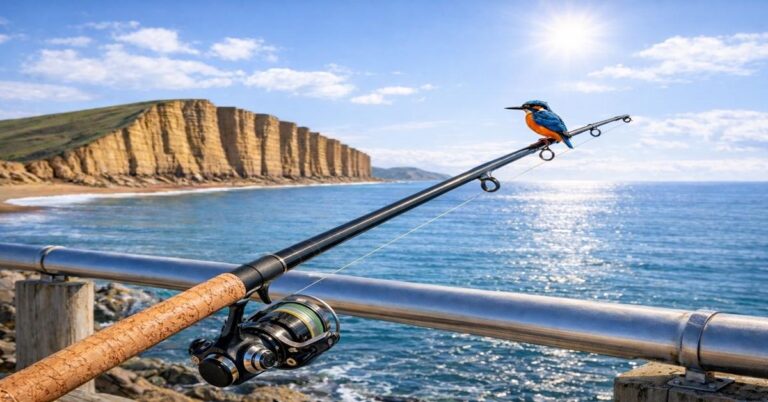
In Chris’s memories, the pink boat serves as a potent symbol of freedom, simplicity, and escape from the emotional turmoil of his childhood.
A Contrast to Domestic Discord
Chris recalls watching a “figure of mystery”—a grey-haired man in a pink, flat-bottomed boat—rowing out from Bridport harbour when he was seven or eight years old. To the young Chris, this man represented a sense of liberty that stood in stark contrast to his own reality. He describes leaving the harbour in his father’s “bright red Ford Anglia,” where he had to endure the “endless bickering and discord” of his parents’ unhappy marriage. The boat signified a life he yearned for, away from the “clenched fists” and “gritted teeth” of his domestic environment.
A Goal for Personal Rebirth
The memory is significant because Chris views his modern life through the lens of this childhood aspiration. He explicitly states that in 2013, he has “become the tall, silver haired fisherman in the pink, flat bottomed boat”. Following his mental breakdown and the collapse of his high-pressure business, Chris deliberately chose an “idyllic, simple life” mending PCs and taking photographs, which mirrors the peaceful existence he projected onto the fisherman decades earlier.
Emotional Continuity
The pink boat also represents a sense of spiritual kinship across time. Although Chris admits he has “not a clue” why the man chose to paint his boat pink, he feels that the man was likely similar to himself. Learning from a customer that the man’s son still works at sea provided Chris with a sense of closure and validation for his own life choices. By identifying with this figure, Chris reframes his retreat from the commercial world not as a failure, but as the successful attainment of a long-held dream of independence and mental peace.
How did the ‘pink boat’ fisherman influence Chris’s adult identity?
Why did Jane feel her husband’s legacy created a ‘pedestal’?
What inspired Chris to write the ‘Icarus’ poem about himself?
How did the ‘pink boat’ fisherman influence Chris’s adult identity?
The “figure of mystery” in the pink boat served as a powerful archetype of freedom and simplicity that Chris eventually adopted as his own adult identity following a period of intense personal and professional trauma.
According to the sources, the influence of the fisherman manifested in the following ways:
A Symbol of Escape from Conflict
As a young boy of seven or eight, Chris would watch the silver-haired fisherman row his pink, flat-bottomed boat out of Bridport harbour. This image stood in direct, painful contrast to Chris’s own reality; while the fisherman enjoyed the “freedom” of the open water, Chris was often confined in his father’s car, forced to endure the “endless bickering and discord” of his parents’ unhappy marriage. The fisherman represented a life unburdened by the domestic “clenched fists” and gritted teeth that defined Chris’s childhood.
The Blueprint for a “Simple Life”
Chris’s adult identity was heavily shaped by a total mental breakdown in 1999, which he attributes to the pressures of business and the end of his 20-year marriage. In the aftermath, he consciously sought to emulate the fisherman’s perceived existence.
• Actualisation of the Archetype: Chris explicitly tells Jane that by 2013, he has “become the tall, silver haired fisherman in the pink, flat bottomed boat”.
• Prioritising Autonomy: He transitioned from a high-pressure commercial career to an “idyllic and simple life” mending PCs and taking photographs. Like the fisherman who answered only to the sea, Chris now only works when he chooses, allowing himself the freedom to chase a mackerel shoal or a “fabulous sunrise” without the burden of “important” obligations.
Psychological Continuity and Peace
Chris views the fisherman as a kindred spirit, suggesting that although he never knew the man, he has a feeling they shared a similar character. Identifying as this figure allows Chris to frame his retreat from the corporate world not as a failure, but as a successful return to a childhood ideal. By adopting this “abstract level of romantic existence,” he maintains a “safe, stress-free” environment designed to ensure that the “dark times” of his past breakdown can never return.
Ultimately, the fisherman provided Chris with a destination for his recovery, allowing him to transform from a “disassembled” businessman back into a “real living person” who values peace over profit.
About the Author